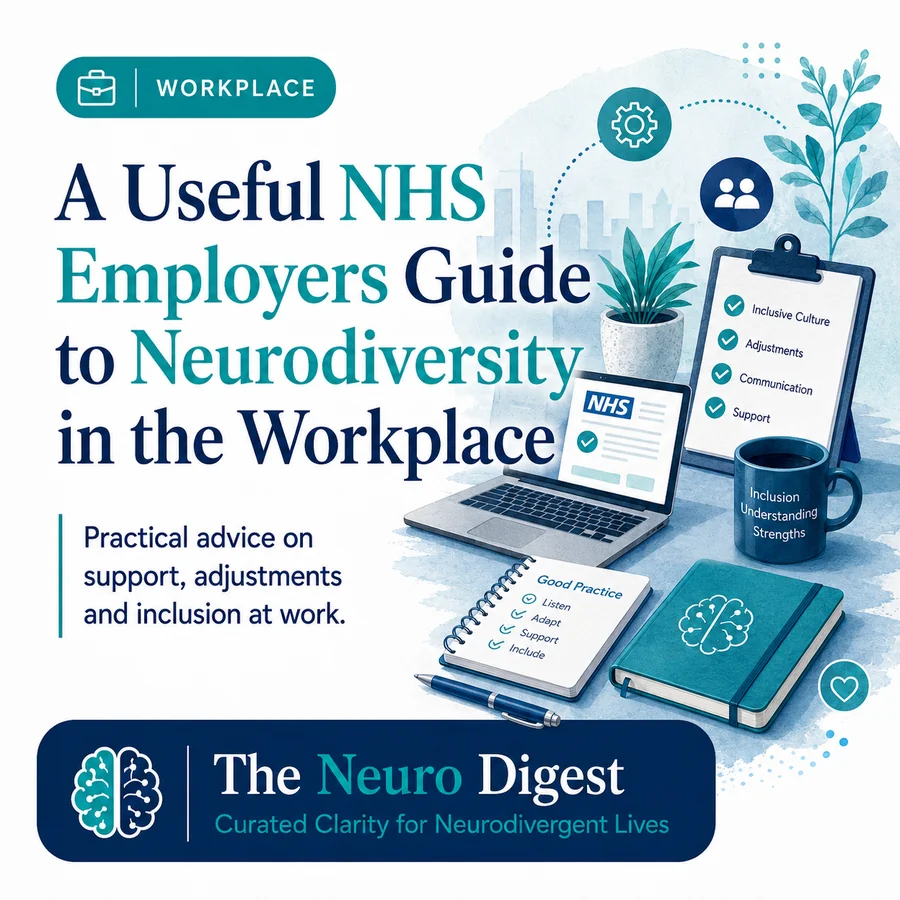
A Useful NHS Employers Guide to Neurodiversity in the Workplace
NHS Employers has published a useful guide to neurodiversity in the workplace, looking at how organisations can better support neurodivergent staff.
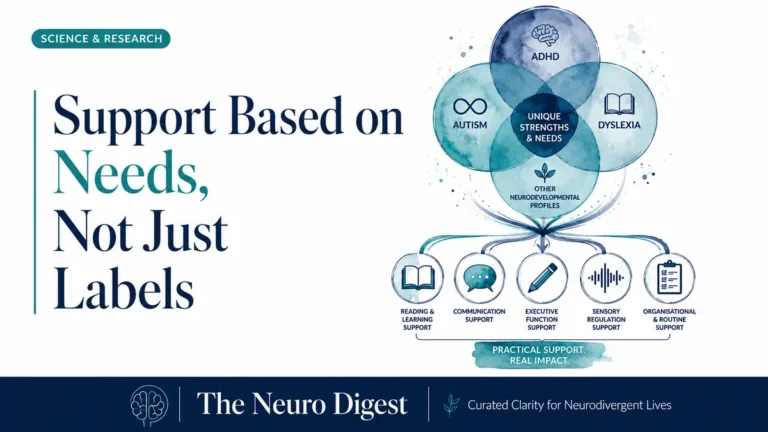
The guide covers neurodivergence as an umbrella term for different thinking styles, including ADHD, autism, dyslexia, dyspraxia, dyscalculia and Tourette’s. It also highlights why inclusive workplaces can benefit both employees and organisations.
Source: NHS Employers
Original Article: “Embracing neurodiversity in the workplace”
Useful for: Employers, managers, HR teams, neurodivergent employees and workplace allies
Why neurodiversity in the workplace matters
We chose this guide because it gives a broad, practical introduction to neurodiversity in the workplace without focusing on just one diagnosis or one type of adjustment.
It covers several areas that matter in real workplaces, including language, open conversations, staff networks, psychological safety, recruitment, manager training, inclusive working practices and sensory-friendly environments.
That makes it a useful starting point for anyone thinking about how workplaces can become more accessible and supportive for neurodivergent people.
Key takeaway
Neurodiversity in the workplace is about more than awareness days or inclusion statements.
It is about practical changes to culture, communication, management and working environments so that neurodivergent people are not expected to succeed only by fitting into systems that were not designed with them in mind.
For employers, a useful question is:
“Are our ways of working accessible to different thinking styles, or are we expecting everyone to succeed in the same environment?”
Read the original article
Read the full guide on NHS Employers:
Embracing neurodiversity in the workplace