ADHD medication use rising fastest among adults and women
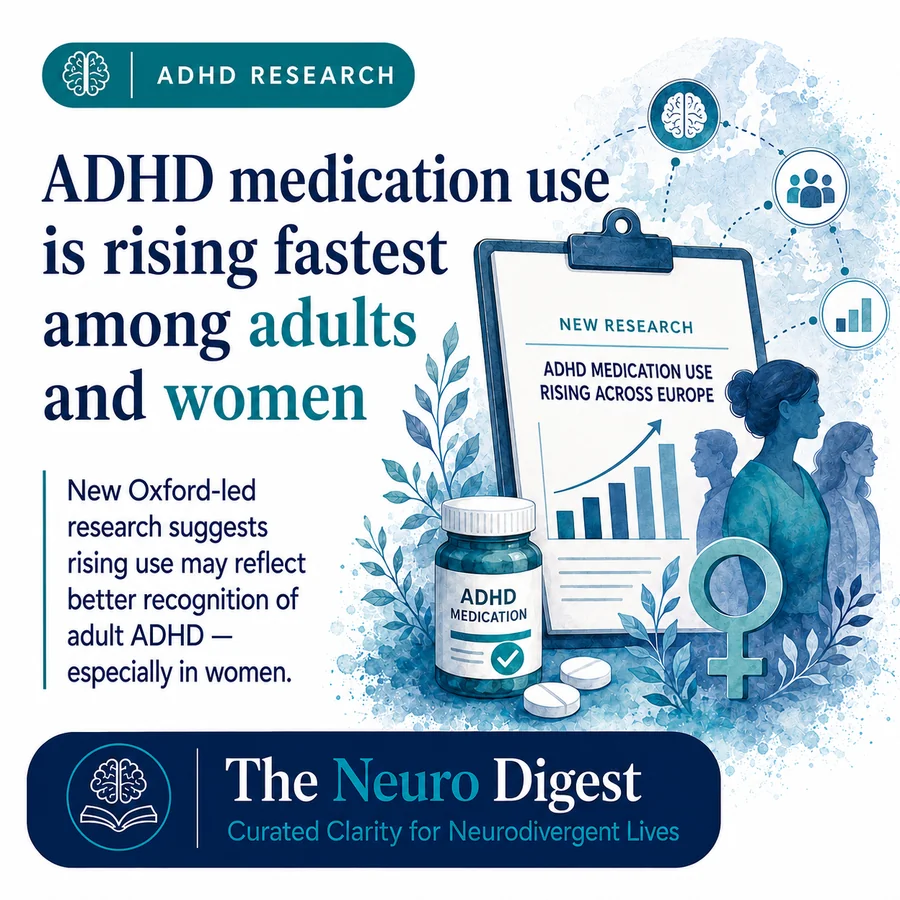
New Oxford-led research has found that ADHD medication use has risen sharply across parts of Europe, with the steepest increases among adults, especially women.
The study looked at ADHD medication use across five European countries: the UK, Belgium, Germany, the Netherlands and Spain.
In the UK, overall ADHD medication use more than tripled between 2010 and 2023. Among adults aged 25 and over, medication use rose more than twenty-fold in women and fifteen-fold in men.
Why this matters
This is not just a story about prescriptions.
It is also a story about recognition.
For a long time, ADHD was often framed as something mainly affecting hyperactive boys. That narrow picture meant many people were missed, especially girls, women and people whose ADHD showed up more through inattention, emotional regulation, overwhelm, internal restlessness, burnout or difficulty managing daily demands.
The rise in adult ADHD medication use may partly reflect something important: more adults are finally being recognised.
Adult ADHD is not new
ADHD does not simply disappear when someone leaves school.
Many adults reach later life having developed coping strategies, masked difficulties, blamed themselves, or been treated for anxiety, depression or burnout without anyone asking whether ADHD might also be part of the picture.
For some people, diagnosis in adulthood can be life-changing. It can help explain years of struggle and open the door to treatment, workplace adjustments, self-understanding and more realistic expectations.
Medication is not the right choice for everyone, and it is not a complete solution on its own. But for many people with ADHD, it can make a significant difference to focus, emotional regulation, impulsivity and day-to-day functioning.
The gender gap is changing
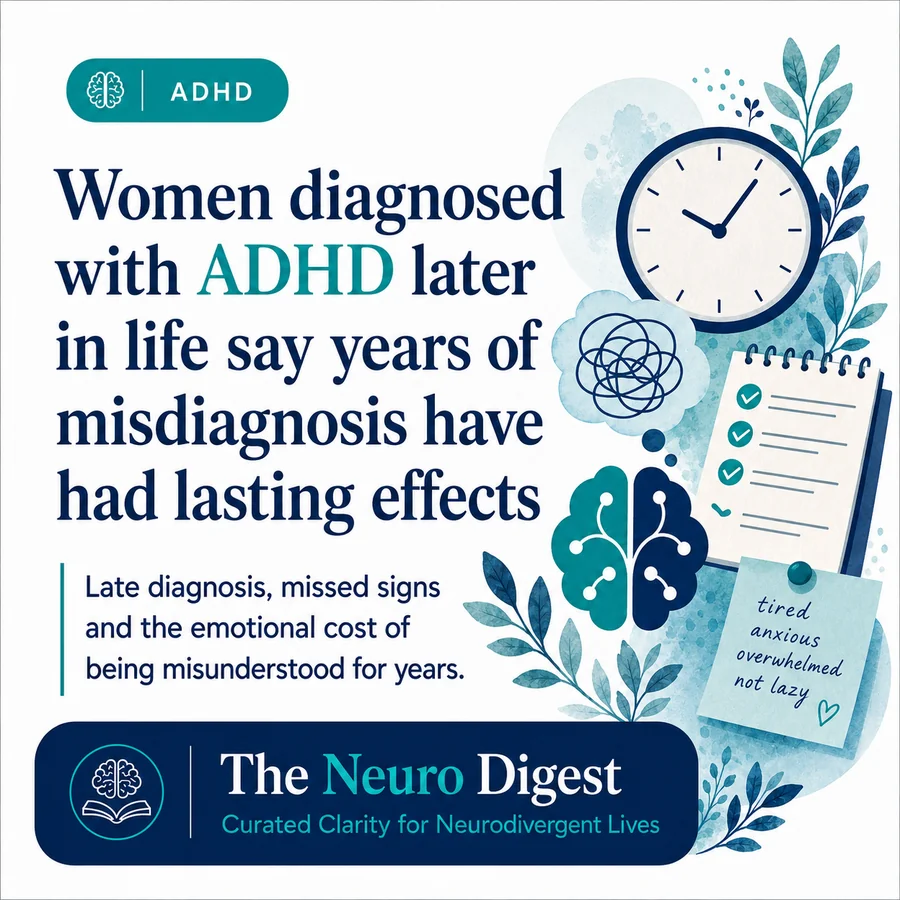
The research found particularly sharp increases among adult women.
That matters because ADHD in women has often been under-recognised. Many girls and women are less likely to fit the old stereotype of disruptive hyperactivity. Their difficulties may be quieter, more internalised, or hidden behind perfectionism, anxiety, people-pleasing or exhaustion.
Some women only begin to recognise their own ADHD after their child is assessed or diagnosed. Others reach crisis point during university, work, parenthood, perimenopause or major life transitions.
Rising medication use does not prove that every need is being met. But it does suggest that the old picture of ADHD was far too limited.
What this does not mean
The increase in medication use should not automatically be treated as evidence of overdiagnosis.
It should also not be treated as proof that services are working well.
Medication data tells us something, but not everything. It does not show how many people are still waiting for assessment, how many cannot access treatment, how many stop because of side effects, or how many are affected by shortages and patchy services.
The better question is not simply “why are more people taking ADHD medication?”
It is:
Why were so many people missed for so long, and are services now prepared to support them properly?
The Neuro Digest view
This research is important because it moves the conversation beyond simplistic headlines.
A rise in ADHD medication use may reflect better awareness, wider recognition of adult ADHD, and changing patterns of diagnosis. But it also raises practical questions about service capacity, long-term care, medication supply and access to support beyond diagnosis.
For adults with ADHD, especially those diagnosed later in life, recognition can be powerful.
But recognition needs to be matched by responsible prescribing, proper follow-up, access to non-medication support where needed, and healthcare systems that understand ADHD as a lifelong condition.
Why we picked this
We picked this story because it speaks to one of the biggest shifts in neurodivergent life: adults are increasingly recognising ADHD in themselves, often after years of being misunderstood.
That shift deserves careful discussion.
Not panic. Not dismissal. Not “everyone has ADHD now.”
Just a more accurate understanding of how ADHD can present across age, gender and life stage.
Key takeaway
ADHD medication use is rising sharply, especially among adults and women.
That should prompt serious questions about diagnosis, care and support — but it should also remind us how many people may have been missed under older, narrower ideas of ADHD.
Sources:
University of Oxford: ADHD medication use rises sharply across Europe, driven by growth among adults
https://www.ox.ac.uk/news/2026-01-23-adhd-medication-use-rises-sharply-across-europe-driven-growth-among-adults
The Lancet Regional Health – Europe: Trends in use of Attention-Deficit Hyperactivity Disorder medications across Europe
https://www.thelancet.com/journals/lanepe/article/PIIS2666-7762(25)00348-5/fulltext