ADHD, autism and mental health review: support must come earlier
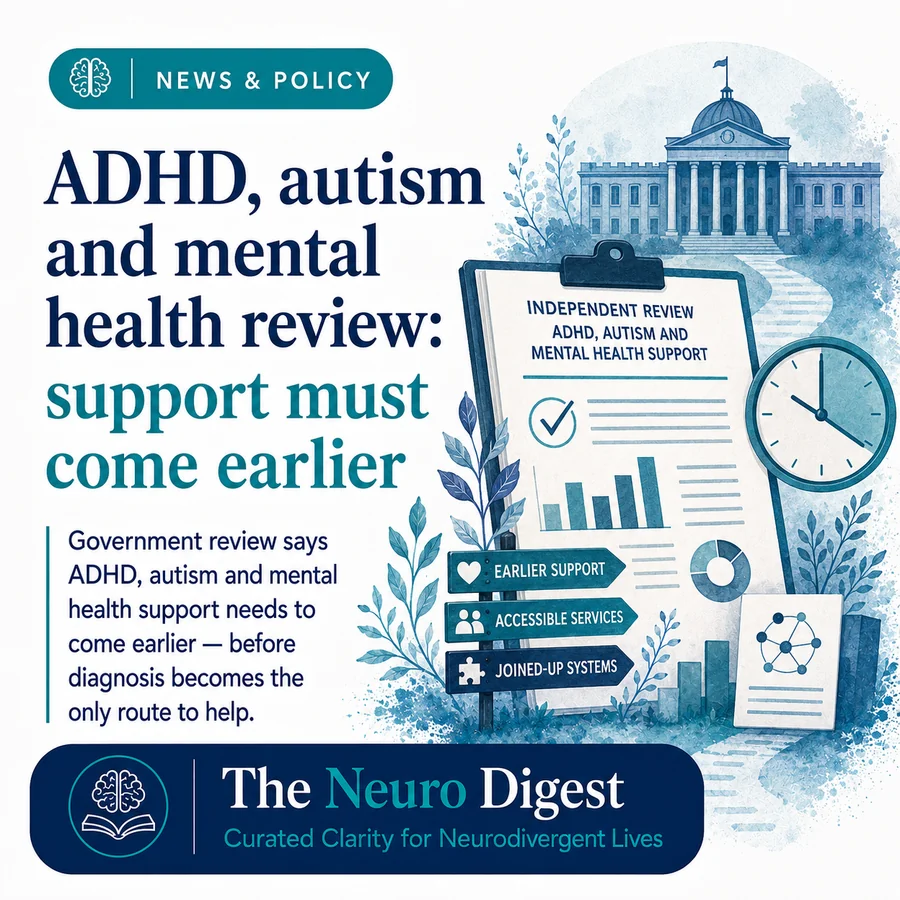
Government review says ADHD, autism and mental health support needs to come earlier
A government-commissioned review into mental health conditions, ADHD and autism has published its interim findings.
The review looks at why demand for support has increased, why services are under pressure, and how people can get help earlier.
Importantly, it does not reduce the issue to one simple explanation.
Instead, the review says several things may be happening at once: rising distress among younger people, better recognition of previously missed needs, more people seeking help, pressure on diagnostic pathways, and systems where diagnosis can become the main route to support.
Why this matters
Public discussion around ADHD, autism and mental health is often pushed into extremes.
One side may argue that rising numbers simply mean more people are finally being recognised. Another may argue that too many people are being labelled or diagnosed.
The reality is more complicated.
The review says the challenge is not just whether numbers have gone up. It is what those numbers mean, who is being recognised, who is still being missed, and whether support is reaching people early enough.
For neurodivergent people and families, this distinction matters.
A diagnosis can be validating. It can also be necessary for adjustments at school, university, work or in healthcare. But when diagnosis becomes the only realistic gateway to support, people can end up stuck on long waiting lists while their needs continue.
Recognition is not the same as support
One of the most important points in the review is the gap between recognition and help.
More awareness of ADHD and autism can be a good thing. It can reduce stigma, help people understand themselves, and bring previously missed needs into view.
But awareness on its own does not solve the practical problem.
If someone is struggling at school, work or home, they may need adjustments, understanding and practical support long before a formal assessment is complete.
A fairer system would not make people wait months or years for help simply because they do not yet have the right paperwork.
The Neuro Digest view
Rising demand should not be used to dismiss people’s experiences.
It should also not be ignored.
The better question is not “are there too many diagnoses?” or “are people just self-diagnosing from social media?”
The better question is:
Why are so many people unable to get the right support until they reach crisis point, fail to cope, or secure a formal diagnosis?
For ADHD and autistic people, especially those who were missed in childhood, diagnosis can be life-changing. But support should be based on need, not only on whether someone has managed to get through a stretched assessment system.
What to watch next
This is only an interim report. The final review is expected to make recommendations about how support should change across health, education and wider public services.
The key issue will be whether those recommendations lead to practical changes.
That means earlier help, clearer pathways, better joined-up services, and support that reflects how people actually function in daily life.
For neurodivergent people and families, the test is simple:
Does the system become easier to access, or does it simply create another report describing problems people already know too well?
Sources:
GOV.UK: Independent review into mental health conditions, ADHD and autism: interim report.
Centre for Mental Health response to the interim review.
Science Media Centre expert reaction to the interim review.