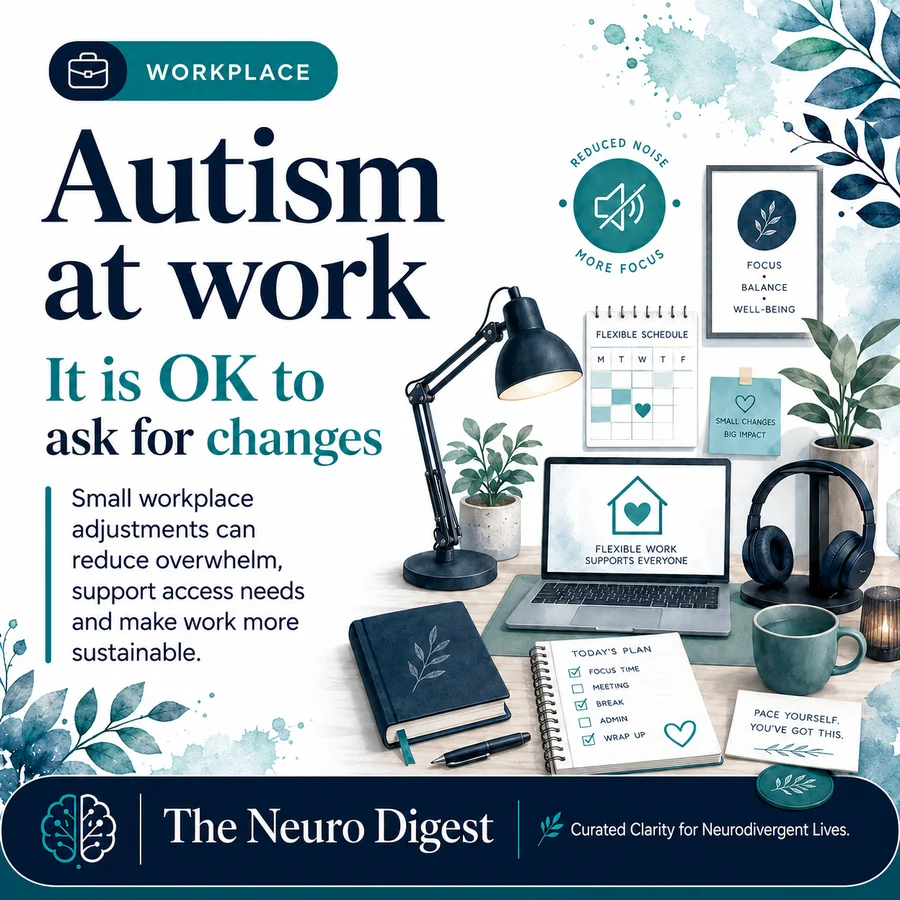
Autism at work: realising it is OK to ask for changes
Autism at work can mean years of masking, adapting and pushing through environments that feel overwhelming. But for many autistic people, realising it is OK to ask for changes can take decades.
A Guardian article by Sandra Thom-Jones describes what it can feel like to work for years in environments that are difficult or exhausting, without fully understanding why. The problem is not personal weakness. The workplace itself is the barrier.
The piece is powerful because it is not just about work. It is about recognising your own needs, finding the words for them, and realising that support is something you are allowed to ask for.
Why autism at work can be exhausting
For many autistic employees, work can be draining for reasons that are invisible to others.
Bright lighting, background noise, air conditioning, constant meetings, unclear expectations, social demands and the pressure to mask can all add up.
The work itself may not be the main problem. The environment around the work can be.
That distinction matters. If an autistic person is struggling, the answer is not always to “try harder” or “be more resilient”. Sometimes the answer is an adjustment that removes an unnecessary barrier.
Why asking for changes can take so long
One of the strongest parts of the Guardian article is the idea that many autistic people do not ask for changes because they have spent a lifetime assuming everyone else experiences the world in the same way.
If bright lights, noise or constant social interaction feel painful or draining, it may still take years to understand that these are valid access needs.
This can be especially true for people diagnosed later in life, or for those who have spent years masking. When you are used to pushing through, asking for support can feel unfamiliar, risky or undeserved.
But needing autistic workplace adjustments is not a failure. It is information about what helps someone work safely and sustainably.
What autistic workplace adjustments can look like
Autistic workplace adjustments do not have to be dramatic.
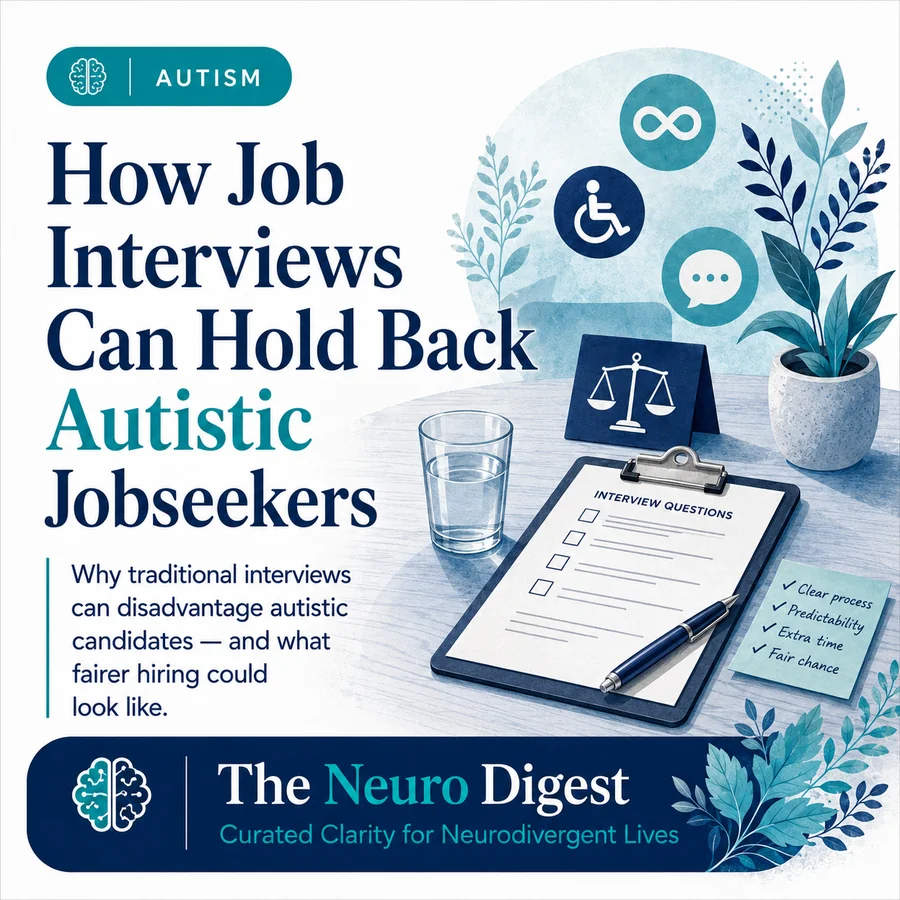
They might include quieter workspaces, different lighting, working from home, headphones, clearer written instructions, fewer unnecessary meetings, flexible hours, sensory breaks or permission to step away when overwhelmed.
The best workplace accommodations are usually specific to the person.
What helps one autistic employee may not help another. That is why listening matters more than assumptions.
Why this matters
Autism at work is often discussed in terms of awareness or inclusion, but this story shows why practical support matters too.
Autistic employees should not have to reach burnout before they are allowed to ask for changes. They should not have to prove they are struggling enough before their needs are taken seriously.
Small adjustments can make a big difference when they are based on trust, respect and real understanding.
Why we picked this
We picked this Guardian article because it puts lived experience at the centre of the workplace conversation.
Rather than focusing on legal risk or employer policy, it shows what it can feel like to realise, after many years, that asking for changes at work is not unreasonable.
For many autistic people, that realisation can be life-changing.
Key takeaway
Autism at work is not just about whether someone can do the job. It is also about whether the workplace allows them to do the job without unnecessary distress, exhaustion or masking.
Asking for changes is not special treatment. For many autistic employees, it is part of making work possible, sustainable and humane.
Source: The Guardian, “Experience: as an autistic person in the workplace, I realised it was OK to ask for changes after 40 years”
https://www.theguardian.com/society/2025/oct/06/experience-autistic-person-in-the-workplace-realised-it-was-ok-to-ask-for-changes-after-40-years