ADHD may be underdiagnosed in adults across England
New research suggests ADHD may still be underdiagnosed in adults across England, despite the recent rise in people receiving a diagnosis.
The study, led by researchers at UCL, the University of Liverpool and King’s College London, looked at recorded ADHD diagnoses in primary care records.
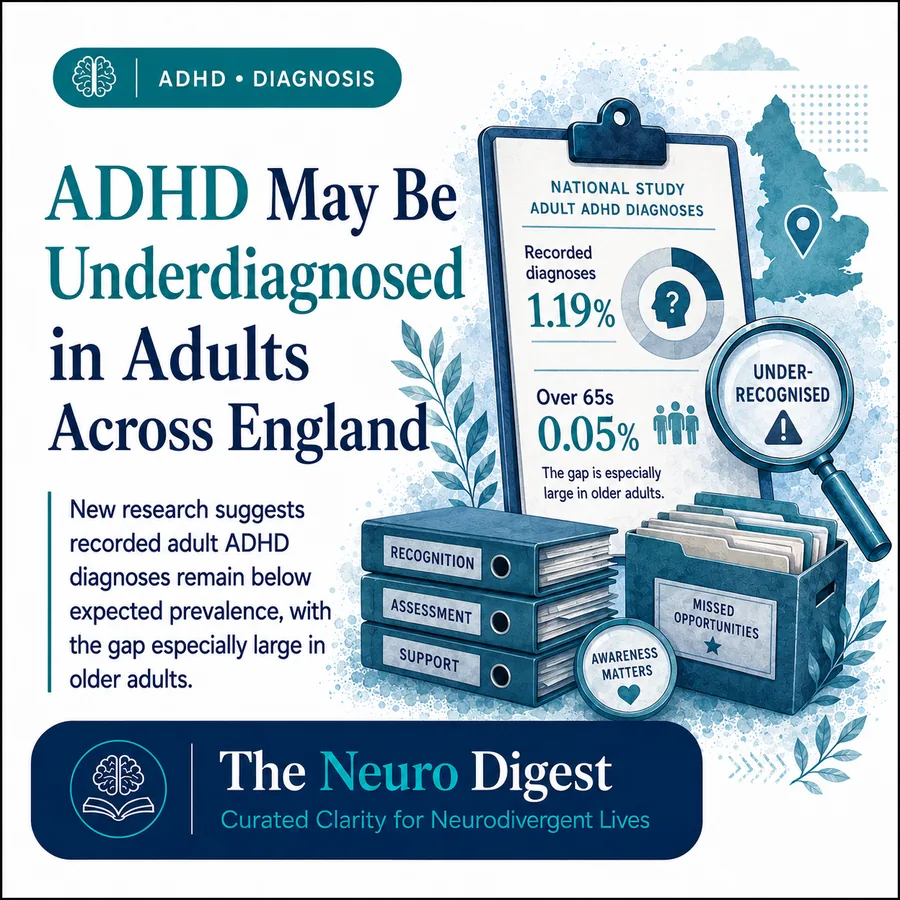
It found that 1.19% of people in England had an ADHD diagnosis recorded in their primary care record. That is notably lower than international estimates of actual ADHD prevalence, which are usually around 3% to 5%.
The gap was especially large in older adults. According to the study, only 0.05% of men and women over the age of 65 had a recorded ADHD diagnosis.
The researchers say this does not necessarily mean ADHD is rare in older adults. Instead, it may reflect historic differences in recognition, access to diagnosis and the way ADHD was understood when older generations were growing up.
Why this matters
Public discussion about ADHD often gets pulled towards the idea that ADHD is suddenly being overdiagnosed.
This research complicates that picture.
Yes, diagnosis rates have increased, especially since 2020. But the study suggests recorded diagnoses are still lower than the best available estimates of how common ADHD is likely to be.
That matters because underdiagnosis is not just a number.
For adults who have gone unrecognised, it can mean decades of misunderstanding, self-blame, missed support, mental health difficulties, workplace problems, relationship strain and being labelled as lazy, difficult or careless.
For older adults, the issue may be especially hidden. Many grew up at a time when ADHD was much less recognised, particularly outside the stereotype of a hyperactive school-age boy.
Why we picked this
This story is important because it challenges a very simple narrative.
Rising ADHD diagnosis does not automatically mean too many people are being diagnosed. It may also mean that services are beginning to recognise people who were previously missed.
The study also points to groups who may not fit older stereotypes about ADHD, including older people, women and people from minoritised ethnic communities.
That is significant because ADHD has often been understood through a narrow lens. People who do not match that image may be more likely to be overlooked, misdiagnosed or left to manage without support.
Key takeaway
The rise in ADHD diagnosis does not mean the problem of underdiagnosis has disappeared.
This research suggests many adults across England may still have unrecognised ADHD, especially older adults and people who do not fit traditional stereotypes.
Better recognition matters, but so does what comes after recognition.
Diagnosis alone is not enough if services are overwhelmed, waiting lists are long and support is difficult to access. The real goal should be accurate recognition, properly resourced services and practical support across the lifespan.
Source
University of Liverpool: ADHD may be underdiagnosed in adults across England
https://news.liverpool.ac.uk/2026/06/15/adhd-may-be-underdiagnosed-in-adults-across-england/