Autism charities call for major diagnosis and support reform
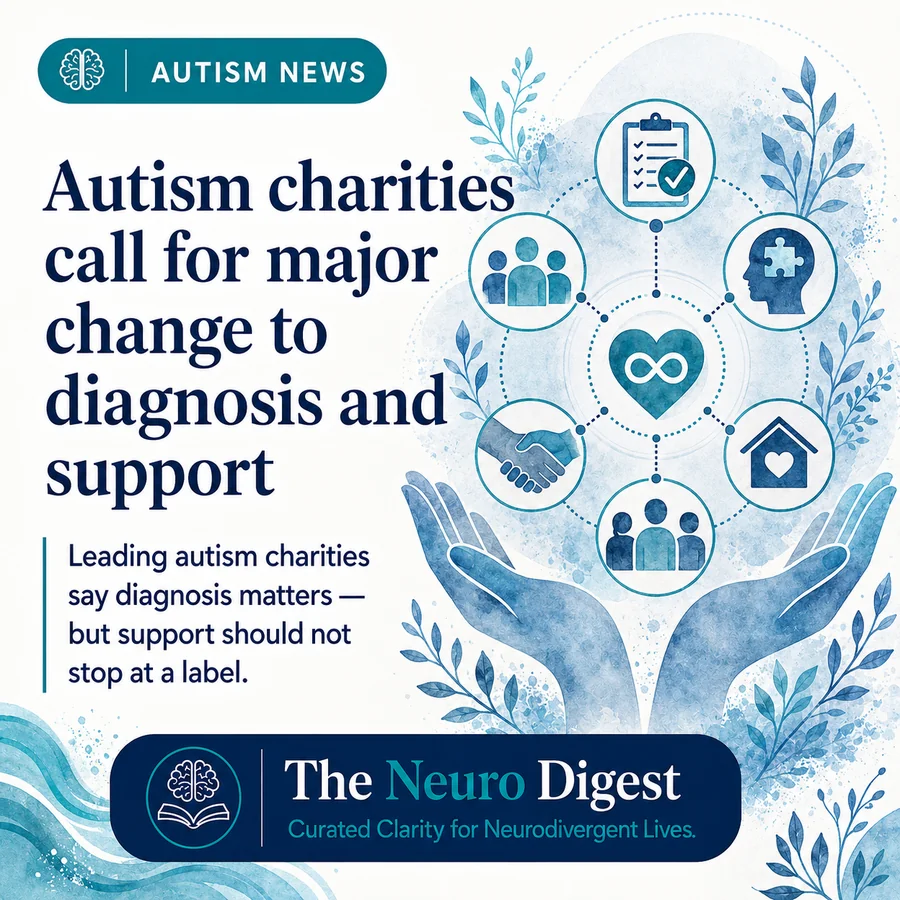
Autism charities call for major change to diagnosis and support
Leading autism charities have called for major reform to the way autistic people are diagnosed and supported in the UK.
The report, called A New Path Ahead, was led by the Autism Alliance and involved autistic people, parents and carers, researchers, clinicians and autism charities, including Autistica.
It argues that the current system needs more than small fixes. Instead, it calls for long-term change so autistic and other neurodivergent people can access diagnosis and support in a way that reflects real lives, real needs and individual strengths.
Why this matters
For many autistic people and families, getting a diagnosis can be an important moment.
It can bring understanding, validation and access to adjustments at school, work, university or in healthcare.
But diagnosis alone is not enough.
Too often, people wait months or years for assessment, only to find that the support afterwards is limited, inconsistent or difficult to access.
That can leave autistic people and families feeling as though they have finally received an explanation, but not the help they need to live well.
Diagnosis should not be the end point
The report calls for a system that enables access to diagnosis for those who need it, but also treats every person as an individual with their own strengths and support needs.
That is an important distinction.
Autistic people are not all the same. Support that works for one person may not work for another. Needs can also change over time, especially during school transitions, changes at work, burnout, illness, family stress or major life events.
A better system would not simply ask, “Does this person meet the criteria?”
It would also ask, “What does this person need to function, communicate, learn, work and live safely?”
The Neuro Digest view
This is exactly the kind of conversation that needs more space.
Public debate often gets stuck on whether more people are being diagnosed, whether waiting lists are too long, or whether services can cope.
Those questions matter.
But the deeper issue is whether the system is designed around people’s actual needs.
Diagnosis can be hugely important. But it should not be treated as the only doorway to support, and it should not be followed by a cliff edge where families are left to work everything out alone.
Autistic people need support that is timely, practical, personalised and available wherever they live.
What the report is calling for
The report calls for investment and a long-term strategy to improve the systems that diagnose and support autistic people.
Its recommendations include better access to diagnosis for those who need it, more personalised support, more consistent provision across the UK, and systems that can adapt as people’s needs change.
That matters because autistic people do not just need recognition on paper.
They need environments, services and expectations that understand them.
Why we picked this
We picked this story because it moves the conversation beyond diagnosis numbers and waiting lists.
It focuses on what happens before, during and after diagnosis — and whether support is actually meaningful.
For The Neuro Digest, that feels like the key takeaway: recognition matters, but recognition should lead somewhere.
Key takeaway
Autism diagnosis can be life-changing, but it should not be the finish line.
The real goal should be earlier, better and more personalised support for autistic people and families.
Sources:
Autistica: A New Path Ahead: Joint charity report calls for major change to support and diagnosis in the UK
https://www.autistica.org.uk/news/joint-charity-report-support-and-diagnosis
GOV.UK: The national strategy for autistic children, young people and adults: 2021 to 2026
https://www.gov.uk/government/publications/national-strategy-for-autistic-children-young-people-and-adults-2021-to-2026