
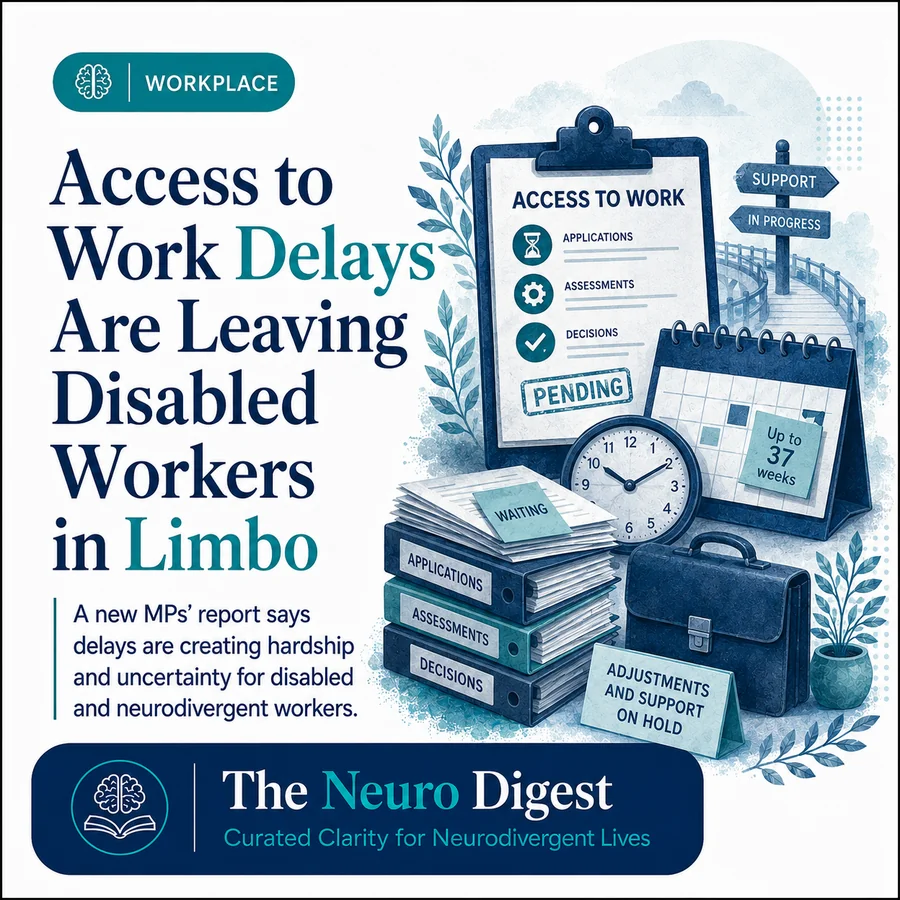
Access to Work delays are leaving disabled workers in limbo
A new parliamentary report has warned that Access to Work delays are creating hardship and uncertainty for disabled people and employers.
Access to Work is a government scheme that helps disabled people, people with health conditions and people with mental health conditions get into work or stay in work. It can help fund practical support such as specialist equipment, support workers, travel support, communication support and workplace adaptations.
The Public Accounts Committee says the scheme is valued by people who rely on it, but that delays are causing serious problems.
According to the committee, delays were the most common issue raised during its inquiry. People described problems at different stages of the process, including applications, assessments, decisions, renewals, reconsiderations and payments.
The report says these delays can affect employment, income, health and wellbeing. It also says the Department for Work and Pensions is currently taking an average of 106 working days to process applications, and that applicants are being told they may have to wait up to 37 weeks.
Why this matters
For disabled and neurodivergent workers, workplace support is not a bonus. It can be what makes work possible.
Access to Work may be relevant to autistic people, ADHDers, dyslexic people and others who need practical adjustments, job coaching, assistive technology, communication support, travel support or help managing workplace demands.
When that support is delayed, people can be left trying to work without the adjustments they need.
That can mean extra stress, burnout, reduced income, missed job opportunities or being pushed out of work altogether.
This is especially important for neurodivergent people because the support system itself can become inaccessible. Long forms, unclear communication, last-minute phone calls, repeated evidence requests and long periods of uncertainty can all add pressure to people who are already trying to stay in work.
Why we picked this
A lot of workplace inclusion advice focuses on awareness, training and positive language.
Those things can help, but they are not enough if the practical support people need is delayed for months.
This report is a reminder that inclusion is not just about good intentions. It also depends on timely decisions, clear communication, funding, admin systems and accountability.
If support only exists on paper, it does not help people in real life.
Key takeaway
Access to Work can be a vital scheme for disabled and neurodivergent workers, but the report suggests it is not currently working quickly or clearly enough for many people who need it.
The issue is not just whether support exists.
It is whether people can actually access it in time to keep their jobs, protect their health and work sustainably.
Source
Public Accounts Committee: The Access to Work scheme
https://publications.parliament.uk/pa/cm5902/cmselect/cmpubacc/92/report.html