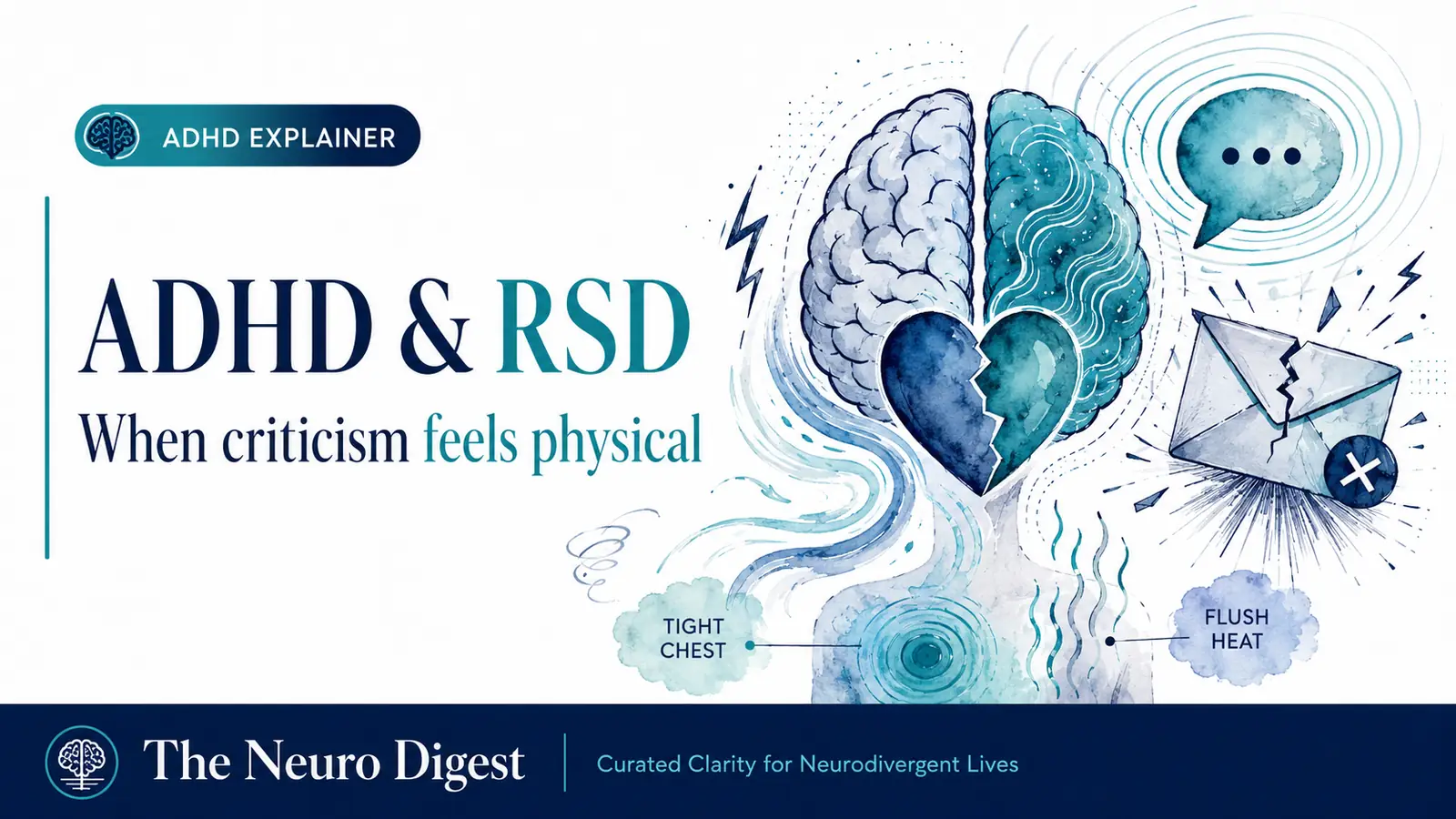
ADHD and Rejection Sensitive Dysphoria: Why Criticism Can Feel So Painful
For many people with ADHD, criticism does not always feel like a small knock. It can feel immediate, physical and overwhelming.
A short reply, a change in tone, a piece of feedback, or even a message left unanswered can sometimes trigger a rush of shame, panic or self-doubt.
This is often described as Rejection Sensitive Dysphoria, or RSD. It is not a formal diagnosis, and it is not listed as a standalone medical condition. But many ADHD people use the term to describe intense emotional distress linked to real or perceived rejection, criticism or disapproval.
What is RSD?
Rejection sensitivity means being especially alert to rejection or criticism. RSD is often used to describe the more intense end of that experience: emotional pain that can feel sudden, consuming and difficult to regulate.
It may look like:
- spiralling after a short or neutral message
- feeling crushed by constructive feedback
- replaying a conversation for hours or days
- avoiding opportunities because rejection feels unbearable
- over-apologising, people-pleasing or withdrawing
- feeling physical symptoms such as nausea, chest tightness or heat in the body
This is not simply “being too sensitive”. For many ADHD people, it sits within a wider pattern of emotional dysregulation: difficulty managing, interpreting and recovering from intense emotions.
What does the research say?
A 2026 qualitative study published in PLOS One explored rejection sensitivity in ADHD students through focus-group interviews.
The study was small, involving five undergraduate students with formal ADHD diagnoses, so it should not be treated as proof that all ADHD people experience RSD in the same way. But it does give useful insight into what rejection sensitivity can feel like from the inside.
The researchers identified three main themes: withdrawal, masking and bodily sensations.
Withdrawal
Participants described avoiding friendships, relationships, university work and career opportunities because the anticipation of rejection felt so painful.
This matters because avoidance can be protective in the short term but limiting in the long term. Avoiding people, feedback or opportunities may reduce the immediate risk of emotional pain, but it can also lead to isolation and missed chances.
Masking
The study also found that participants often hid how much rejection or criticism affected them.
Some described appearing calm or unfazed on the outside while feeling deeply distressed inside. Over time, this kind of masking can leave people feeling disconnected from their own emotions and from other people.
It is a reminder that someone may look “fine” while struggling internally.
Bodily sensations
One of the most striking parts of the study was that participants did not describe rejection sensitivity as only emotional. They also described physical sensations, including nausea, tightness, heat, stomach discomfort and feeling frozen or paralysed.
That does not mean RSD is the same as a physical injury. But it helps explain why people may describe rejection as something they feel in the body, not just in their thoughts.
Why this matters
RSD can affect relationships, education, work, confidence and self-esteem.
Someone may avoid applying for a job, not because they lack ambition, but because rejection feels unbearable. They may stop messaging friends, not because they do not care, but because an unanswered message can feel like proof they are unwanted. They may seem defensive during feedback, not because they reject help, but because their nervous system has already registered the situation as danger.
Understanding this does not mean nobody should ever give feedback to ADHD people. It means feedback may need to be clearer, kinder and less ambiguous.
Key takeaway
Rejection Sensitive Dysphoria is not a formal diagnosis, and the research is still developing. But for many ADHD people, the term gives language to an experience that can be confusing, painful and isolating.
The latest research suggests that rejection sensitivity in ADHD can involve more than hurt feelings. It can involve withdrawal, masking and strong bodily reactions.
That does not make someone weak, dramatic or “too sensitive”. It means the emotional impact is real — and worth understanding.
Sources:
PLOS One: The lived experience of rejection sensitivity in ADHD – A qualitative exploration
Brighton and Sussex Medical School: “It hurts in your body”: new BSMS research explores rejection sensitivity in ADHD
Sage Journals: Associations Between ADHD Symptoms and Rejection Sensitivity in College Students
Sage Journals: Neurodivergent Experiences of Rejection Sensitive Dysphoria Expose the Environmental Factors too Often Overlooked
Cleveland Clinic: Rejection Sensitive Dysphoria